

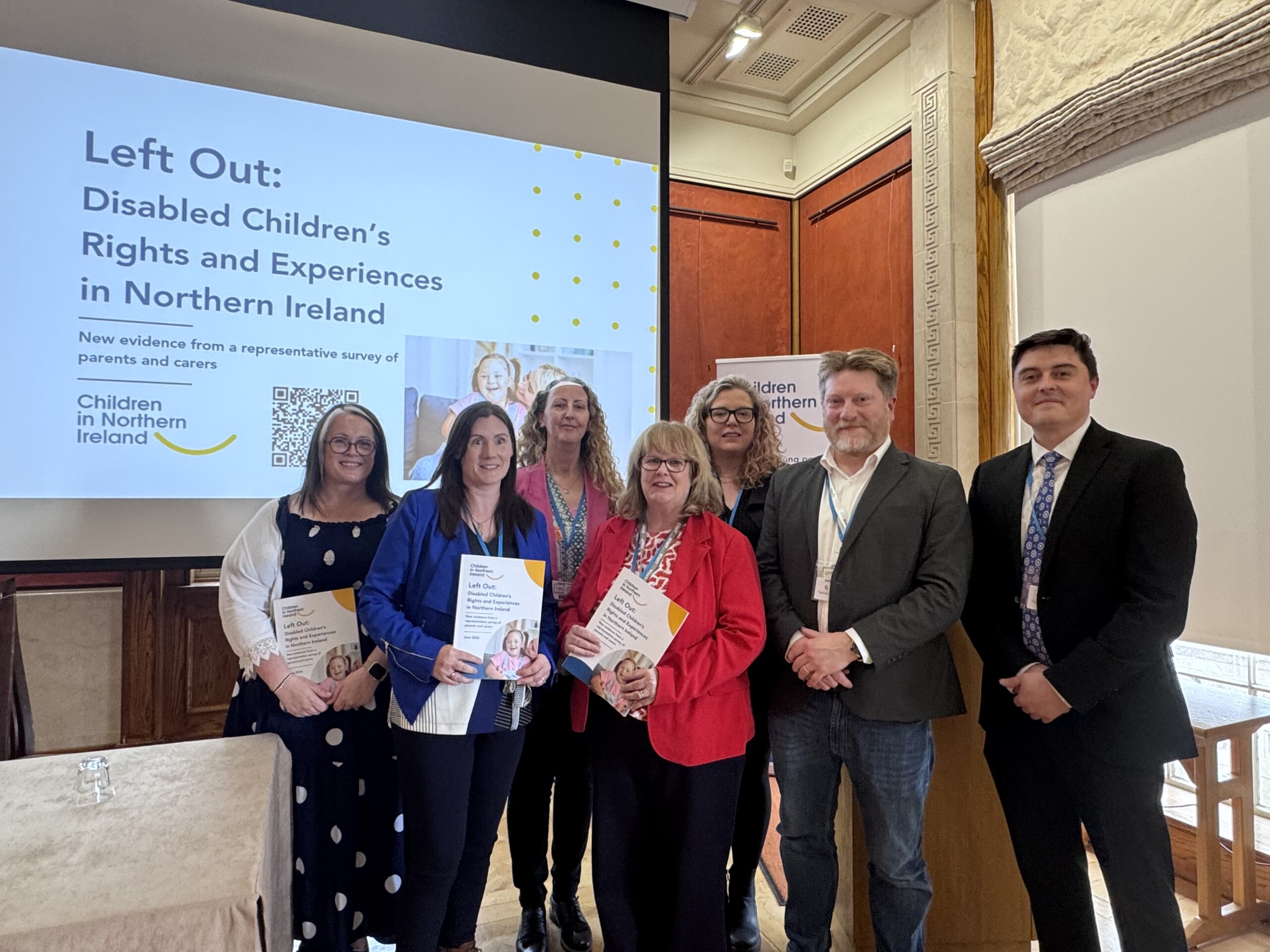
On 4 June 2026, Children in Northern Ireland (CiNI) launched its new research report on the experiences of disabled children and their families at a well-attended event in the Long Gallery at Parliament Buildings, Stormont.
The event brought together elected representatives, policymakers, statutory agencies, voluntary and community organisations, practitioners, parents and carers to hear the findings of what is one of the most comprehensive studies undertaken in recent years examining the lives of disabled children and their families in Northern Ireland.
Key findings reveal widespread inequalities
The research paints a stark picture of the inequalities experienced by disabled children across many aspects of their lives. Drawing on the views of over 1,100 parents and carers, the findings reveal significant barriers in accessing healthcare, education, services and support, play and leisure opportunities, participation in society, and achieving an adequate standard of living.
Across every area examined, parents and carers of disabled children reported poorer experiences and outcomes than those of non-disabled children.
The research found that:
- 77% of parents and carers of disabled children believe their child needs more support than they currently receive
- 73% said it is a struggle to access public services to support their child’s needs
- 65% reported difficulties accessing healthcare services and treatment
- 53% reported difficulties accessing educational support
- 81% said it is difficult for their child to participate fully in society
- 62% reported difficulties accessing play and leisure
- 75% said current financial support does not reflect the true cost of raising a disabled child
The findings also highlight the cumulative pressures experienced by families caring for disabled children. Parents described long waiting times for assessments and treatment, difficulties accessing support, financial hardship, challenges within education, social isolation and the emotional toll of continually having to advocate for their children.
Perhaps most concerning was the extent to which parents and carers questioned whether their children’s rights were being upheld in practice. Across healthcare, education, participation, play and leisure, standard of living and support for disabled children to reach their full potential, parents and carers of disabled children were consistently more likely than other parents to report that their children’s rights were not being fully realised.
A roadmap for change: recommendations
While the report identifies significant challenges, it also provides a roadmap for change.
The report contains twenty recommendations aimed at improving outcomes for disabled children and their families through a more coordinated, rights-based and inclusive approach across government and public services. These include strengthening disability legislation and children’s rights protections, improving access to services and support, reducing waiting times, increasing investment in early intervention and disability services, addressing the financial pressures facing families, delivering a more inclusive education system and strengthening accountability for the implementation of the Northern Ireland Executive’s Disability Strategy.
Turning evidence into action
Speaking at the launch, CiNI Chief Executive Natalie Whelehan highlighted the importance of moving from evidence to action:
“The findings of this research are both significant and concerning. Across every area examined, families told us that disabled children continue to face barriers that limit their opportunities, participation and wellbeing. The evidence is clear, but evidence alone is not enough. The challenge now is to ensure that these findings lead to meaningful action and measurable improvements in the lives of disabled children and their families.”
The launch also provided an opportunity for discussion between policymakers, practitioners, advocacy organisations and families about the changes required to address the inequalities identified in the report and ensure that disabled children can fully realise their rights and reach their potential.
Over the coming months, CiNI will engage with government departments, public bodies and sector partners to promote the report’s recommendations and support action to improve outcomes for disabled children and their families across Northern Ireland.
This research provides an important baseline against which future progress can be measured. More importantly, it amplifies the voices and experiences of families whose perspectives must remain at the centre of policy and service development.
Disabled children have the same rights, aspirations and potential as every other child. Ensuring those rights are realised in practice must be a priority for all of us.
Research launch video, Parliament Buildings Stormont
On 4 June 2026, Children in Northern Ireland (CiNI) launched its new research report on the experiences of disabled children and their families at a well-attended event in the Long Gallery at Parliament Buildings, Stormont.
The event brought together elected representatives, policymakers, statutory agencies, voluntary and community organisations, practitioners, parents and carers to hear the findings of what is one of the most comprehensive studies undertaken in recent years examining the lives of disabled children and their families in Northern Ireland.
Key findings reveal widespread inequalities
The research paints a stark picture of the inequalities experienced by disabled children across many aspects of their lives. Drawing on the views of over 1,100 parents and carers, the findings reveal significant barriers in accessing healthcare, education, services and support, play and leisure opportunities, participation in society, and achieving an adequate standard of living.
Across every area examined, parents and carers of disabled children reported poorer experiences and outcomes than those of non-disabled children.
The research found that:
- 77% of parents and carers of disabled children believe their child needs more support than they currently receive
- 73% said it is a struggle to access public services to support their child’s needs
- 65% reported difficulties accessing healthcare services and treatment
- 53% reported difficulties accessing educational support
- 81% said it is difficult for their child to participate fully in society
- 62% reported difficulties accessing play and leisure
- 75% said current financial support does not reflect the true cost of raising a disabled child
The findings also highlight the cumulative pressures experienced by families caring for disabled children. Parents described long waiting times for assessments and treatment, difficulties accessing support, financial hardship, challenges within education, social isolation and the emotional toll of continually having to advocate for their children.
Perhaps most concerning was the extent to which parents and carers questioned whether their children’s rights were being upheld in practice. Across healthcare, education, participation, play and leisure, standard of living and support for disabled children to reach their full potential, parents and carers of disabled children were consistently more likely than other parents to report that their children’s rights were not being fully realised.
A roadmap for change: recommendations
While the report identifies significant challenges, it also provides a roadmap for change.
The report contains twenty recommendations aimed at improving outcomes for disabled children and their families through a more coordinated, rights-based and inclusive approach across government and public services. These include strengthening disability legislation and children’s rights protections, improving access to services and support, reducing waiting times, increasing investment in early intervention and disability services, addressing the financial pressures facing families, delivering a more inclusive education system and strengthening accountability for the implementation of the Northern Ireland Executive’s Disability Strategy.
Turning evidence into action
Speaking at the launch, CiNI Chief Executive Natalie Whelehan highlighted the importance of moving from evidence to action:
“The findings of this research are both significant and concerning. Across every area examined, families told us that disabled children continue to face barriers that limit their opportunities, participation and wellbeing. The evidence is clear, but evidence alone is not enough. The challenge now is to ensure that these findings lead to meaningful action and measurable improvements in the lives of disabled children and their families.”
The launch also provided an opportunity for discussion between policymakers, practitioners, advocacy organisations and families about the changes required to address the inequalities identified in the report and ensure that disabled children can fully realise their rights and reach their potential.
Over the coming months, CiNI will engage with government departments, public bodies and sector partners to promote the report’s recommendations and support action to improve outcomes for disabled children and their families across Northern Ireland.
This research provides an important baseline against which future progress can be measured. More importantly, it amplifies the voices and experiences of families whose perspectives must remain at the centre of policy and service development.
Disabled children have the same rights, aspirations and potential as every other child. Ensuring those rights are realised in practice must be a priority for all of us.
